
Success stories
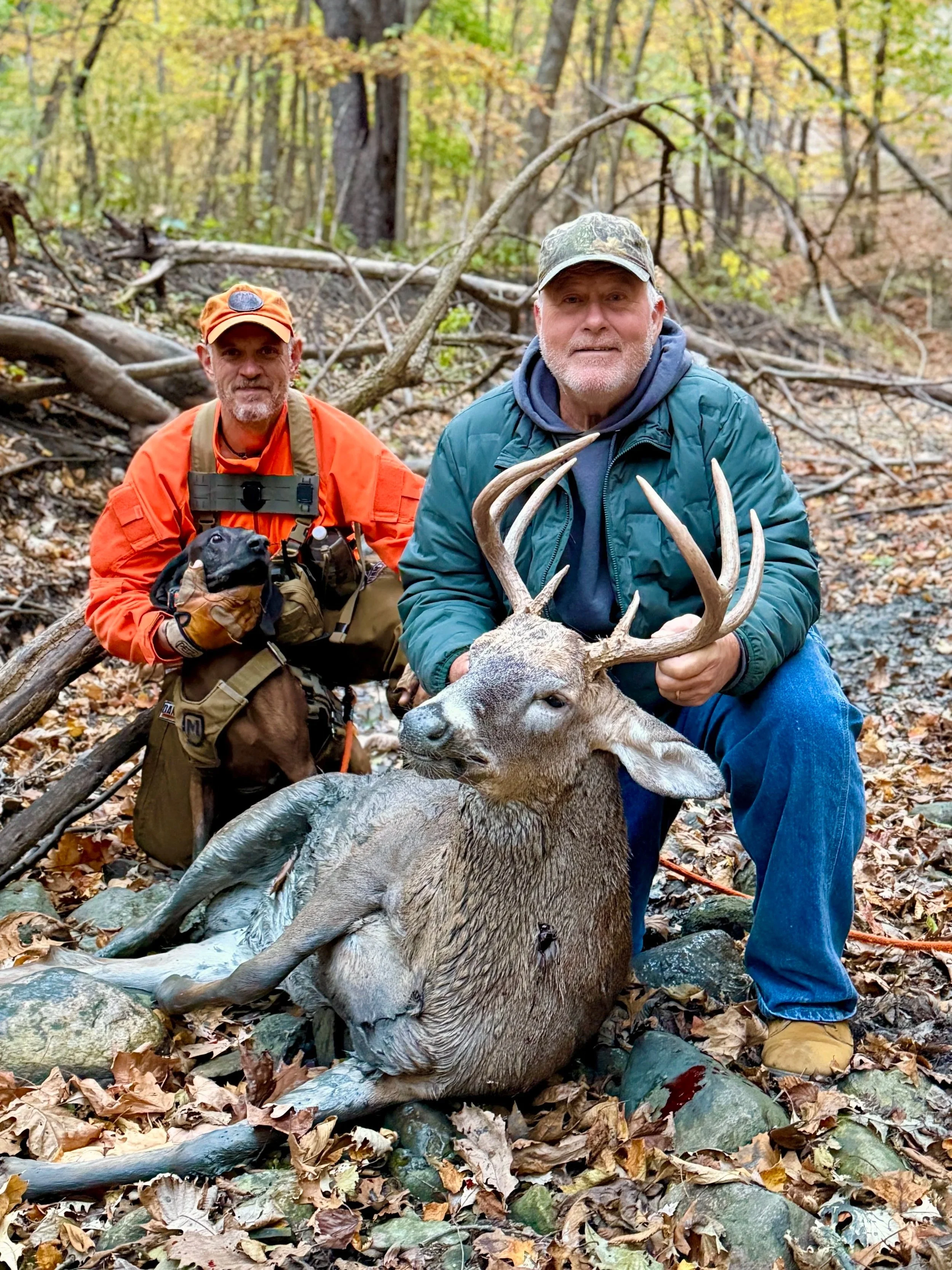
State: illinois
Weapon: compound bow
Shot placement: liver / lung
Distance tracked: 609 yards
Time since shot: 25 hours
Outcome: recovery
THE TRACK THAT TOOK ALL DAY
We see it every year - As the rut approaches, bucks become harder to track and mortally wounded bucks go farther and live longer than they normally would. Increases in testosterone and an overwhelming will to breed pushes bucks to do things we dont normally see.
Denny arrowed this buck around 5:00pm. The hunting party quickly ran out of blood that night and decided to come back in the morning. We were called after they couldn’t advance the line any further.
At 17 hours after the hit, Diesel took us to the buck 425 yards away bedded on a dry creek bank. Just as Diesel approached, the buck explodes from his bed and awkwardly makes his way down a ravine. We waited 10 minutes and I followed up with Diesel going slow on a short lead. We found him bedded again at 165 yards from the jump. I marked the spot and backed out and gave the buck more time. 3 hours later and now 20 hours after the shot, we jump him again.
I decided to run two other tracks I had scheduled and would try the buck one last time for the day an hour before dark, which is now 26 hours after the shot. We finally found the buck dead 303 yards after our second jump.
Never underestimate what a wounded buck during the rut can and will do. Myths about wounded bucks not going up hill, won’t jump fences or always going to water isn’t what we see on a regular basis. Hunters who know this and make conservative decisions about when to track and how far will always recover more animals than those that don’t.
